Overgrown Path (ESP)
Overgrown Path: música, memoria y biografía
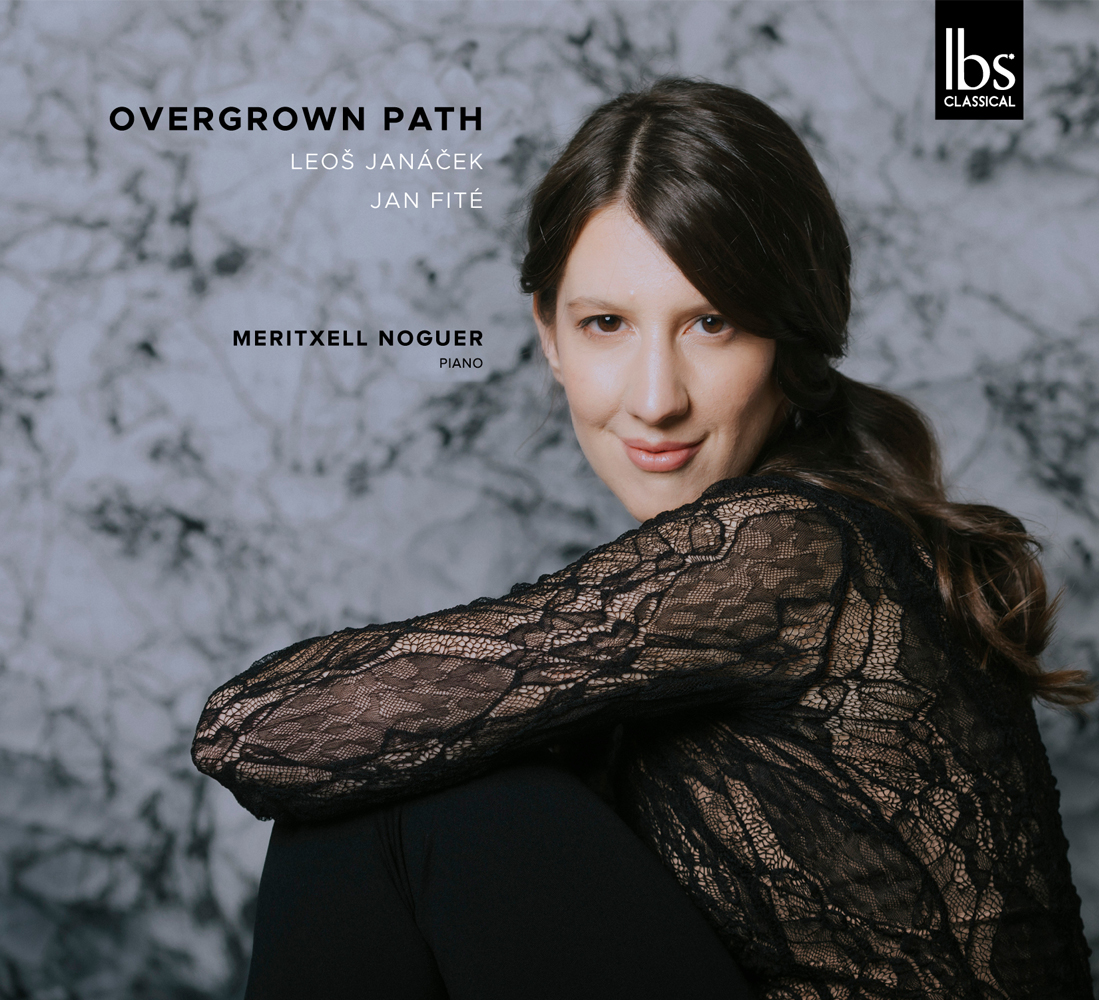
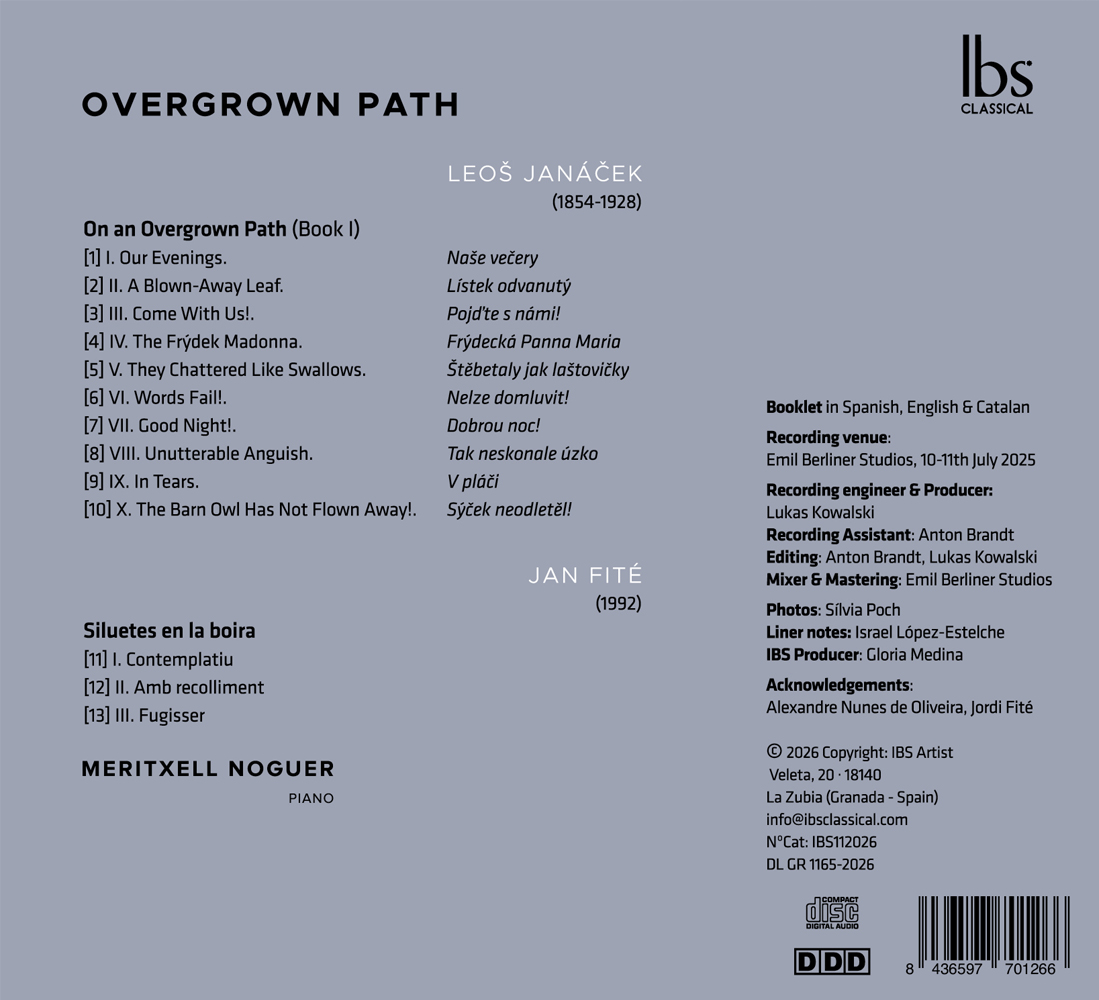
En Overgrown Path, la pianista Meritxell Noguer construye un recorrido de gran coherencia poética entre dos obras nacidas en contextos muy distintos: On an Overgrown Path de Leoš Janáček y Siluetes en la boira de Jan Fité. Más allá de la distancia histórica, geográfica y estética que separa a ambos compositores, el proyecto revela afinidades profundas entre sus lenguajes y convierte el álbum en un único trayecto expresivo, atravesado por la memoria, la introspección, la contención y la evocación.
El punto de partida es On an Overgrown Path, una de las obras pianísticas más personales de Janáček. El ciclo fue tomando forma a lo largo de más de una década, entre 1900 y 1911, a partir de piezas inicialmente concebidas para armonio y posteriormente revisadas, ampliadas y trasladadas al piano. Con el tiempo, aquellas miniaturas fueron adquiriendo un sentido cada vez más autobiográfico, hasta convertirse en un verdadero paisaje interior del compositor.
En estas piezas aflora de manera especialmente intensa el dolor por la muerte de su hija Olga, pero también el compromiso de Janáček con la cultura eslava y con la lengua checa. Melancolía, angustia, recuerdos y resonancias de una especie de “folclore imaginario” recorren una escritura de aparente sencillez, formada por frases breves, texturas cristalinas y una enorme densidad emocional. Janáček no reproduce literalmente el folclore: lo transforma en una materia nueva, profundamente personal, capaz de sugerir una memoria colectiva y al mismo tiempo íntima.
Meritxell Noguer se acerca a este universo desde una interpretación minuciosamente construida. Su lectura destaca por la claridad de las voces, el equilibrio entre los distintos planos, la precisión rítmica y un uso del pedal especialmente refinado. En movimientos como Good Night!, Unutterable Anguish o In Tears, la pianista evita todo exceso expresivo y deja que la emoción surja desde la contención. El resultado no busca un dramatismo inmediato, sino una expresión más profunda y suspendida, en la que el dolor aparece ligado al recuerdo y a la memoria.
El recorrido encuentra su prolongación en Siluetes en la boira (Siluetas en la niebla), de Jan Fité Piguillem, obra compuesta expresamente para este proyecto. Aunque no nació con la intención de responder directamente a Janáček, entre ambas partituras surgen conexiones inesperadas que refuerzan la continuidad del disco. Fité desarrolla un lenguaje luminoso, directo y sensual, con una especial atención al color, al espacio sonoro y a la claridad de las ideas. Su música parte de la contemplación armónica, el estatismo reflexivo y unas melodías breves, casi declamadas o susurradas, que crean una atmósfera de suspensión y nebulosidad.
En Siluetes en la boira, la sensación de tiempo detenido convive con una escritura rica en resonancias, arabescos y ritmos de danza. La obra avanza siempre desde la sutileza: incluso en sus momentos de mayor intensidad, la expresión permanece contenida. Esa cualidad encuentra una especial correspondencia en la interpretación de Noguer, que trabaja las dinámicas con extraordinario cuidado, hace emerger los diferentes planos sonoros y perfila con gran precisión la arquitectura de cada movimiento. La estrecha colaboración con el compositor se percibe en una lectura que parece comprender desde dentro la lógica de la obra.
Uno de los mayores logros de Overgrown Path reside precisamente en esa capacidad de hacer convivir dos universos sin forzar sus semejanzas. Janáček y Fité conservan plenamente sus respectivas identidades, pero la interpretación de Meritxell Noguer descubre entre ellos un hilo común: una manera de entender la sencillez, la introspección, la evocación y el poder expresivo del sonido. El álbum no plantea, por tanto, una yuxtaposición entre repertorio histórico y creación contemporánea, sino una auténtica continuidad artística.
Así, Overgrown Path se convierte en una reflexión sobre la música como forma de biografía. En Janáček, esa dimensión aparece ligada a la pérdida, al recuerdo y a la memoria personal; en Fité, a una escritura que dialoga con distintas experiencias y referencias musicales; y en Noguer, a una elección interpretativa que une ambos mundos desde una misma sensibilidad. El resultado es un recorrido íntimo y coherente, en el que pasado y presente parecen estar mucho más cerca de lo que inicialmente podría suponerse.
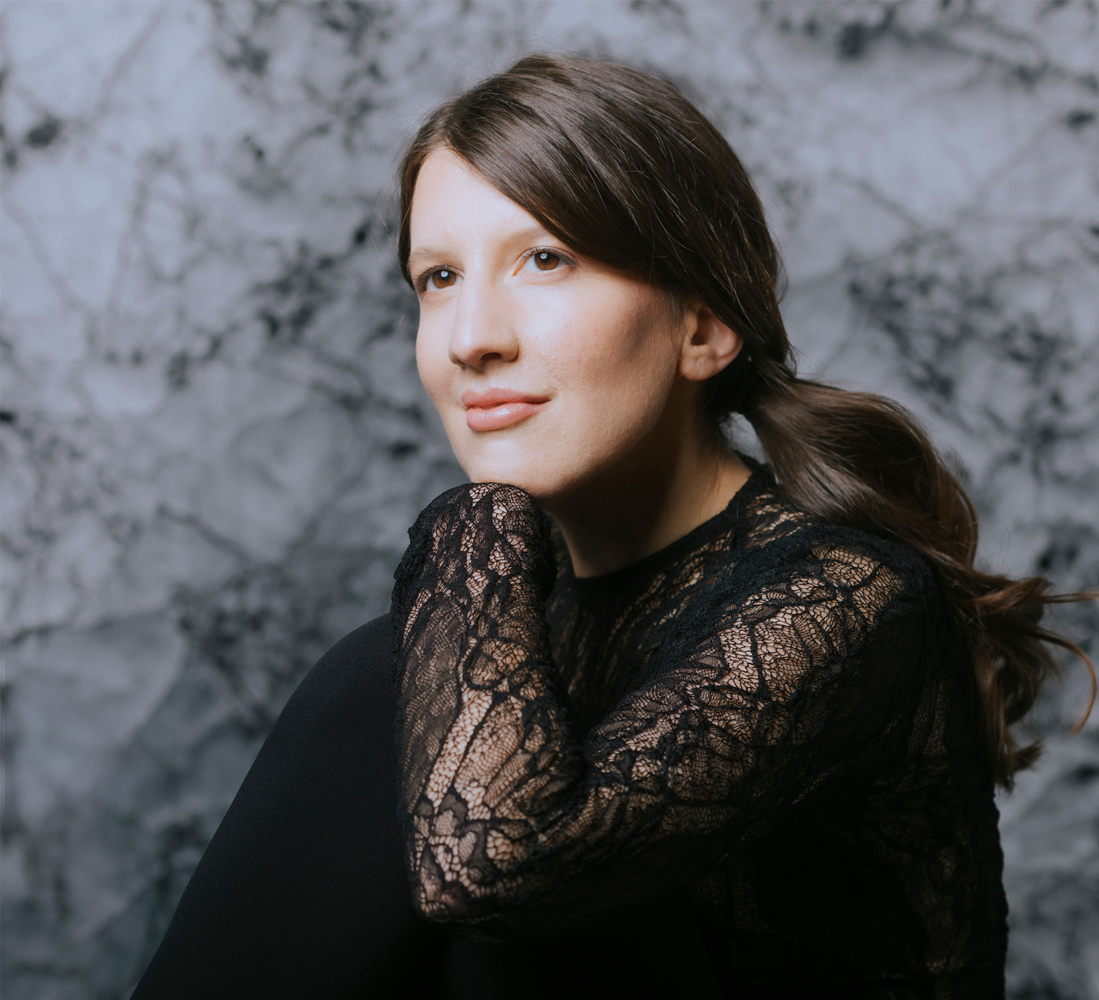
Meritxell Noguer
Meritxell Noguer began her piano studies at the Escola de Música del Gironès with Toni G. Guzmán. She subsequently entered the Isaac Albéniz Conservatory in Girona, where she studied with Maria Àngels Pardàs and graduated with the highest distinction. During this period, she attended masterclasses with Luiz de Moura, Carles Marquès and Alexis Golovin, and received numerous awards, including Second Prize at the 8th Vila de Salou Competition (2008), Second Prize at the Girona Conservatory Performance and Composition Competition (2009), and the Audience Prize at the Arjau Performance Competition (2011), among others. In 2011, she began her undergraduate studies in piano performance at the Escola Superior de Música de Catalunya (ESMUC), studying with Denis Lossev and Adolf Pla. Alongside her principal studies, she received tuition in piano and chamber music from Francisco Poyato, Kennedy Moretti, Katya Apekisheva and Caroline Palmer. During these years, she was awarded Second Prize at the Arjau Performance Competition (2013) and an Honourable Mention at the Girona Conservatory Performance and Composition Awards (2013). After graduating, Noguer moved to London to further her pianistic training with a Master’s degree in Performance at the Guildhall School of Music & Drama, where she was awarded a scholarship by the institution and studied with Peter Bithell and Carole Presland. During her time in London, she also received guidance from Laura Roberts, Pamela Lidiard and Ronan O’Hora, among others. She has performed as a soloist and chamber musician throughout Spain and abroad, playing at venues such as Milton Court and St John’s Church Waterloo in London, Auditori Viader in Girona, Jardí dels Tarongers in Barcelona, Auditori Joan Plaça in Valencia, Ateneo de Madrid, Festival Toca’m in Tortosa, and Festival Portalblau in L’Escala. In 2022, she released her first solo album, Resonance. That same year, she was selected by Joventuts Musicals de Catalunya, enabling her to present the album in a series of concerts across Catalonia, including the Fringe Festival of Torroella de Montgrí. Noguer firmly believes in the universality of classical music and is committed to bringing it closer to new audiences through educational concerts in schools, community centres and hospitals. She combines a strong commitment to both solo and chamber music repertoire, with a particular interest in exploring lesser-known works and creating connections between established and contemporary musical voices.
Jan Fité
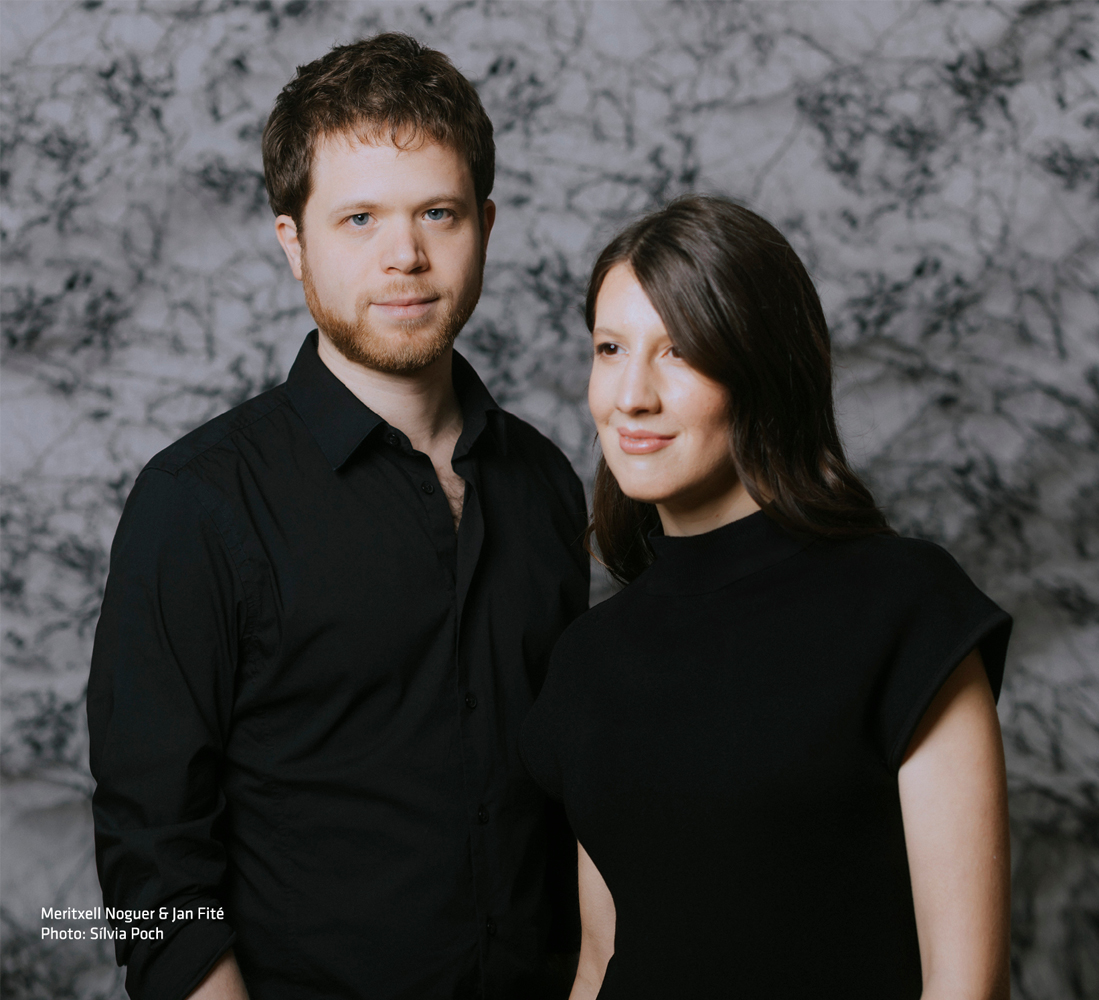
Born in Sabadell in 1992, Jan Fité Piguillem‘s musical career has been shaped by the complementary disciplines of composition and double bass performance. He studied at the Sabadell Conservatory before achieving a Bachelor’s degree in Double Bass at the Escola Superior de Música de Catalunya (ESMUC). He subsequently completed a Master’s degree in Composition at the Royal College of Music in London (2015–2017), where he was awarded the Major Van Someren-Godfrey Memorial Scholarship and the Jo Horowitz Prize for Composition 2017. This training shaped the early stages of his professional career, leading him to perform with some of Spain’s most prominent orchestras and chamber ensembles, including the Franz Schubert Filharmonia, Camerata 432 and Murtra Ensemble. Alongside his work as a performer, he continued to develop as a composer under the guidance of his teacher and mentor, Miquel Pardo-Llongarriu. At the heart of Fité’s creative approach lies his relationship with performers, an essential aspect of his work that has fostered numerous artistic collaborations and led to the premières of many of his compositions. Particularly significant is his collaboration with violinist Bernat Bofarull, which resulted in the album Converses (Aglae, 2024), as well as his work with pianist Meritxell Noguer, resulting in this album Overgrown Path including the première recording of Siluetes en la boira. Since 2021, Fité has collaborated regularly with composer Olivier Derivière and his studio AMEO. This partnership has led him to spend extended periods in Paris, where he has explored advanced interactive systems and contemporary approaches to applied music. Within this field, he has contributed orchestrations and additional music to projects recorded by the London Contemporary Orchestra at Abbey Road Studios, as well as by the Bratislava Symphony Orchestra. Born into a family with strong ties to the theatre, Fité has also maintained a close relationship with the stage throughout his career, working with established companies including Il·lús Teatre, La Calòrica and Etcétera Teatro. His music has been presented and performed at some of Spain’s most prestigious theatrical venues, including the Teatre Lliure and the Centro Dramático Nacional.