


The Supremacy of Genius
Who can, or dares to, do anything after Beethoven?
Franz Schubert (1797–1828)
The German model of Romanticism, guided by a yearning for infinity and rooted in a great philosophical tradition with a strong tendency toward systematization, exerted a notable influence on writers. It represents a solemnity of the eternal, also reflected in the landscape painting of Moritz von Schwind, Ferdinand Georg Waldmüller, Anton Hansch, and Erasmus Engert –to mention only a few names– and at the same time opened a complex and varied world that is manifested with direct transparency in the life and art of Ludwig van Beethoven (Bonn, 1770 – Vienna, 1827). Never before in the history of musical art had a composer delved so deeply into the realm of passions or participated so profoundly in the enthusiasm and ideals of his age as he did, engaging directly with the movement of ideas and even with the political sentiment of a particular historical moment. Beethoven gave life to a theoretical framework that has often distracted attention from the extraordinary musical perfection of his works, which is where the true source of his greatness lies.
Even though there is an abundance of literature on his loneliness and deafness –formulated in the famous Heiligenstadt Testament (1802)– his determination to resist despair and to face an adverse destiny heroically cannot be understood without reference to that psychological complexity of combative will which helps explain the features that make his works the first true musical manifestation of the modern age. These creations can be summarized in the intensity of expression under every form and through every means available to him –in the increasing technical difficulties and richness of sound, as well as in the multitude of expressive markings particularly related to the freedom of melodic rhythm–.
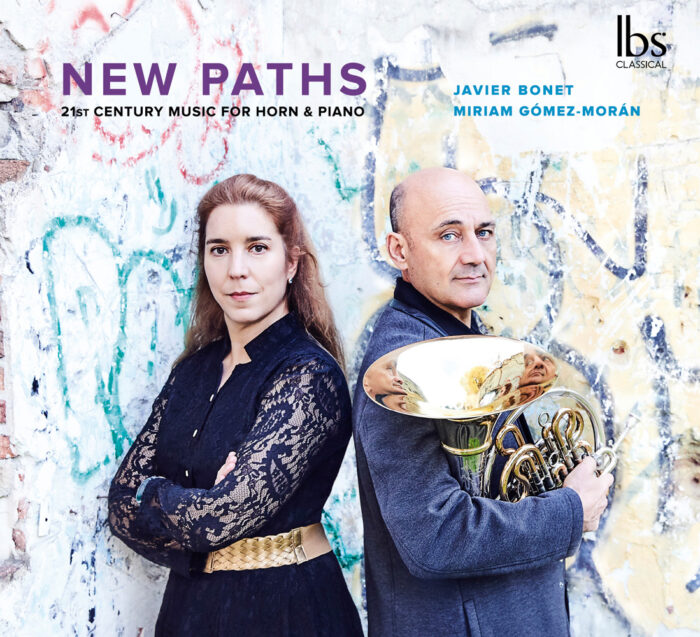
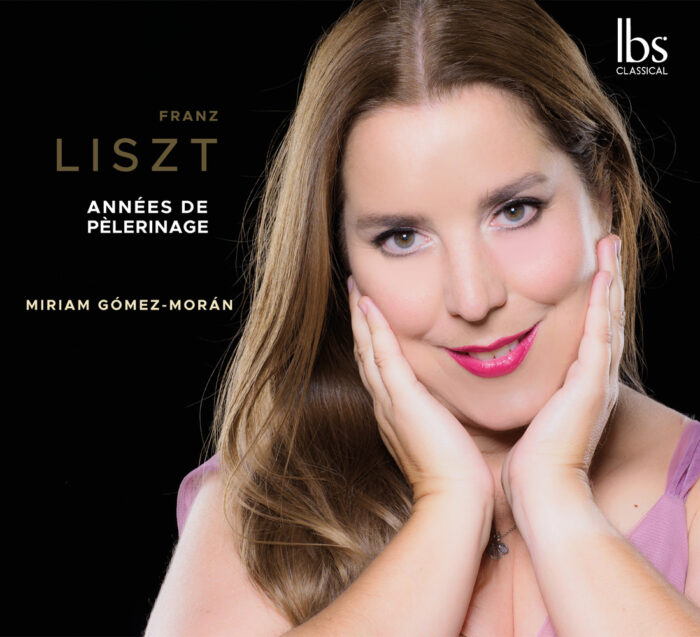
All these elements, in the hands of the distinguished pianist Miriam Gómez-Morán, acquire a new perspective, heightened by her constant deepening of harmonic understanding, which serves to create dramatic tension within the formal framework of the sonata. Within this structure, the struggle between two opposing principles is polarized in a violent contrast of light and shadow, through the analogy of the individuality of the most holy trinity of music: harmony, melody, and rhythm.
This new recording by the Spanish pianist –who already possesses an extensive discography– also reveals her scholarly profile: the philosophical connotation and forward-looking vision inherent to Gómez-Morán’s artistic personality offer here a clear example of her ability to transcend conventions, achieving a perfect balance between sensitivity and strength.
To these observations we may add those of Enrico Fubini, who reminds us of the mid-eighteenth-century sonata form –narrative rather than dialectical– which redefines, in essentially modern and Enlightenment terms, the ideal of a solid musical language open to the most fascinating adventures of the spirit and capable of gently yielding to the expression of the most complex emotions within a comprehensible logical structure.
Yet the sonata form possesses a history that extends beyond the Enlightenment; by its very nature it is endowed with great flexibility and with a remarkable capacity for mutation and transformation, while remaining unquestionably faithful to its initial framework, so as to embody musical and cultural ideals far removed from its Enlightenment origins. It can therefore be said that the structure of the sonata form already contained, in embryonic fashion, the future tensions that composers such as Beethoven would later introduce. From that primarily discursive structure we associate with Franz Joseph Haydn and also with Wolfgang Amadeus Mozart, there emerged a dialectical and dramatic organization in which tensions incline toward disruption, and in which diversity and thematic variety give way to violent opposition.
Moreover, the imitation of affects is here replaced by expression in the fullest sense of the term –in that of consciousness and intimacy– which Gómez-Morán explores here with masterly insight.
The Asemantic Nature and Spirituality of Musical Language
As Massimo Mila observes, Beethoven –who lived within a society transformed by the French Revolution and in a Europe convulsed by the Napoleonic wars– stands at the very center of the ferment of ideas and aspirations of the new ideology, endowed with an autonomous moral consciousness.
The spiritual movements that, from Sturm und Drang to Romanticism, gradually crystallized with the turn of the century drew their inspiration from the ideal of human freedom contained in Kant’s philosophy. At the same time, the Promethean titanism that Friedrich Schiller and Johann Wolfgang von Goethe had promoted among the youth–urging humankind to struggle against an unjust society and even against divinity itself–was understood by Beethoven with uncommon intensity, in his heroic endeavor to react bravely to the adversities that marked his tormented existence. Mila adds that it is precisely in the sonata form that Beethoven’s genius finds its synthesis.
As in a ritual, the development of themes, their evolution, and ultimately their reduction to total unity –at times becoming the unfolding of a drama or a narrative in which all elements come into play– are resolved in a finale where contrasts are gathered and reconciled at the moment of the triumph of tonality. Tonal functions must be understood in this process with an intensity hitherto unknown, since modulation acquires a dominant dramatic value. Owing to the complexity inherent in its generative process, the interpretation of Beethoven’s work must therefore be viewed as an immense task, in which the artist must transcend his own personality and consciously and responsibly yield to the greatness of creation.
Albert Ferrer Flamarich, for his part, notes that Beethoven’s late sonatas cannot be performed on the instruments for which his early works were conceived. In the 1790s, when Beethoven began giving recitals in Vienna, he played on locally built instruments of the time, whose light mechanism favored the speed and clarity characteristic of much late eighteenth-century music. The usual keyboard range was five octaves; the structure was made of wood, and the hammers were covered with a thin layer of leather. Such pianos barely withstood the unusual force with which Beethoven played, as his student and friend Ferdinand Ries recalled.
While Viennese-action instruments remained largely unchanged in design well into the nineteenth century, their English and French counterparts were becoming increasingly robust. The author also cites Luca Chiantore’s remarks, referring to Tia DeNora’s observation that even at that time many differences between Beethoven and his contemporaries were already apparent:
“[…] his music had increasingly dense textures; […] pianistic writing tended not to rely so much on scale patterns; melodies were structured in a more ambiguous and less periodic way; harmonies were bolder and more ambiguous; the dynamic range was broader (with very frequent abrupt and sudden changes); it was noted that some of his compositions were longer than those of his predecessors and contemporaries.”
By the end of 1798, the center of Beethoven’s creative output had clearly shifted toward the piano: two piano concertos, three piano trios, two cello sonatas, three violin sonatas, and about ten solo piano sonatas. To these must be added several songs, sets of variations, and other youthful works–such as the Piano Quartets WoO 36, and the Piano Sonatas WoO 47 (known as the Kurfürstensonaten). Works of this latter type were addressed to that cultural elite which ensured the composer’s prestige –associated with the French concept of bon goût– and which had also become, on occasion, the amateur performer of music in the private sphere.