
Descripción
 |
 |
 |
 |
 |
 |
|---|


14,95€
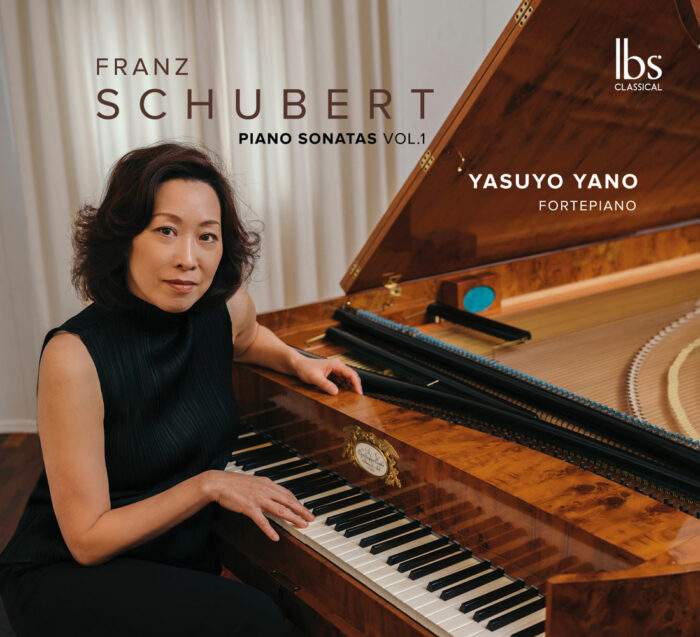
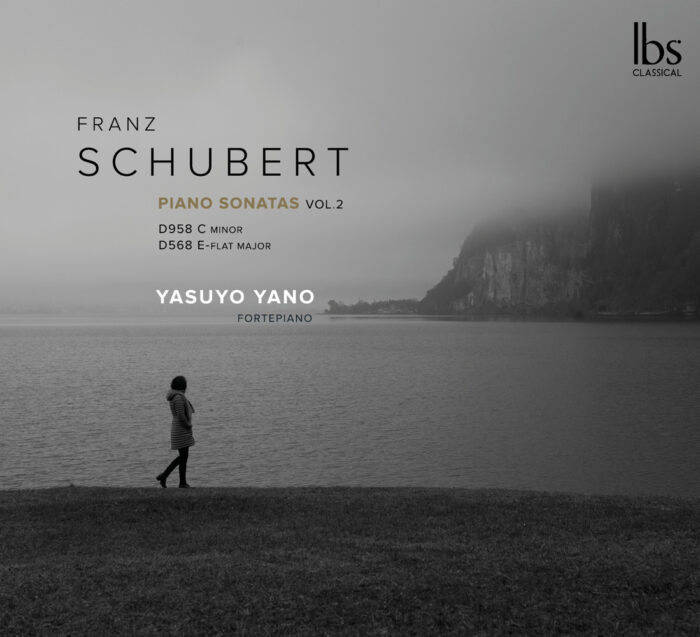
Third volume of Franz Schubert’s complete piano sonatas, performed by Japanese fortepianist Yasuyo Yano, professor at Lucerne University of Applied Sciences. Recorder in Swizerland with a Christopher Clarke fortepiano. Schubert only made his first public appearance shortly after his 22nd birthday on 28 February 1819 (i.e. in the last third of his life!) in the hall of the hotel ‘Zum Römischen Kaiser’ with ‘Schäfers Klagelied’. This was also the year in which the first so-called ‘evening entertainments’ took place at Ignaz Sonnleithner’s house. These gatherings focussed on literature and music, and from 1821 these events became known as ‘Schubertiades’. As the name suggests, Franz Schubert was the centre of these events, where he was able to present his compositions to his extended circle of friends. However, in terms of their social impact, these events could not be compared with the grandiose opera performances, most of which featured Rossini’s works and sent the whole of Vienna into a veritable ‘Rossini frenzy’. Instead of performing in glamorous theatre lights, Schubert sat at the piano by candlelight, where he played his songs and piano sonatas to his friends dancing late into the night.
BOOKLET
14,95€
|
|
|
|
|
|
|---|
The Schubertiade – epitome of Romanticism and stage for Schubert’s piano sonatas
Schubert and Beethoven were contemporaries and both realised their musical ideas in Vienna. However, Beethoven was a generation older and was already at the zenith of his career when Schubert wrote down his first composition (1810, Piano Fantasy in G major for four hands). A year earlier, Beethoven had already composed his fifth piano concerto and his fifth symphony.
These circumstances must have made a strong impression on the young Franz Schubert. There is no doubt that Beethoven, as a shining light of Romantic music, was a tremendous role model (E.T.A. Hoffmann said of Beethoven: ‘Beethoven awakens that infinite longing which is the essence of Romanticism’).
Schubert only made his first public appearance shortly after his 22nd birthday on 28 February 1819 (i.e. in the last third of his life!) in the hall of the hotel ‘Zum Römischen Kaiser’ with ‘Schäfers Klagelied’. This was also the year in which the first so-called ‘evening entertainments’ took place at Ignaz Sonnleithner’s house. These gatherings focussed on literature and music, and from 1821 these events became known as ‘Schubertiades’. As the name suggests, Franz Schubert was the centre of these events, where he was able to present his compositions to his extended circle of friends. However, in terms of their social impact, these events could not be compared with the grandiose opera performances, most of which featured Rossini’s works and sent the whole of Vienna into a veritable ‘Rossini frenzy’. Instead of performing in glamorous theatre lights, Schubert sat at the piano by candlelight, where he played his songs and piano sonatas to his friends dancing late into the night.
One could perhaps assume that the intimate and sociable aspect of the Schubertiades may have hindered Franz Schubert’s career. However, since Schubert valued sociability enormously, one would also like to assume that he was probably content to be in these circumstances. However, he had also sought success in opera. His operas ‘Die Zwillingsbrüder’ and ‘Zauberharfe’ were performed in 1820. Although ‘Zauberharfe’ was performed seven times at the Theater an der Wien, Schubert would probably have needed a position as Kapellmeister at a theatre to gain a foothold in this world. As is well known, he had unsuccessfully applied for such a position.
If, as E.T.A. Hoffmann said, longing is the essence of Romanticism, then Schubert is a Romantic par excellence. He was undoubtedly denied much, but without his enormous powers of inspiration having dried up. The idea that longing was his driving force seems plausible.
While Mozart sometimes wrote down his compositions in the presence of other people, Beethoven, possibly also due to his deafness, isolated himself during this creative act. Retreating to his desk was also essential for Schubert, and if one considers that emigration into the individual inner self was the typical way of life in the Biedermeier period (also imposed by the censorship mania as a result of the Restoration), then Schubert was a kind of archetype of the Romantic man in his time.
Chamber music in a small circle, lieder and finally piano music are ideally suited to embody this longing for his own inner world.
Yasuyo Yano was born in Tokyo. Her teachers were Midori Matsubara, then Sergio Perticaroli and Carla Giudici at the Academia Nazionale di Santa Cecilia in Rome. Yasuyo Yano has also received precious advice from other famous pianists, such as Jacques Rouvier, Dang Thai Son and Paul Badura-Skoda. Yasuyo Yano now lives in Switzerland where she teaches the piano, Fortepiano and chamber music at the Lucerne University of Applied Sciences and Arts. She gives solo recitals and is also a chamber music performer, both on the Fortepiano and the modern piano. Yasuyo Yano tells of her encounter with the Fortepiano: “In Venice, in 2001, I played the complete Mozart sonatas for violin and piano together with the violinist Giuliano Carmignola. Andrea Marcon, another eminent Italian musician, told me after one of these concerts that I should consider playing Fortepiano. I took his advice and I am today still thankful for it, because working with the Fortepiano has opened up entirely new dimensions for me. On the one hand, the Fortepiano enables me to imagine and hear how the music must have sounded back in those days, and on the other hand, the Fortepiano is quite different to modern pianos, offering a large spectrum for creative leeway with a rich palette of sound colors, a wide range of dynamics and the delicate response of the keyboard to touch. I had not expected all of this! But it was quite a long journey to master the instrument so that I was able to reveal these characteristics – a journey with a wonderful reward as it has lead me to Schubert.“