



Philip Cashian
Chamber Concerto No.2: I. Novemberscape
14,95€
Philip Cashian (Manchester, 1963) es una de las voces más personales de la música británica contemporánea, reconocido por un lenguaje que combina una intensa energía rítmica con una escritura armónica luminosa y refinada. Su música ha sido descrita como “un reflejo intransigente del mundo moderno” y se caracteriza por un trabajo motívico muy concentrado, un acusado sentido del color instrumental y una constante tensión entre impulso y quietud. Formado en la Guildhall School of Music and Drama con Oliver Knussen y Simon Bainbridge, y posteriormente con Lukas Foss en Tanglewood, Cashian ha desarrollado un estilo intelectualmente riguroso y, al mismo tiempo, de impacto físico inmediato.
_____________________________________
Philip Cashian (born Manchester, 1963) is one of the most distinctive voices in contemporary British music, widely recognised for a style that combines rhythmic urgency with luminous harmonic writing. His music has been described as “an uncompromising reflection of the modern world,” characterised by tightly worked motivic ideas, striking instrumental colour, and a constant tension between propulsion and stillness. Trained at the Guildhall School of Music and Drama with Oliver Knussen and Simon Bainbridge, and later with Lukas Foss at Tanglewood, Cashian has developed a language that is both intellectually rigorous and immediately physical in its impact.
BOOKLET
14,95€
CASHIAN CHAMBER CONCERTOS
Philip Cashian (Manchester, 1963) es una de las voces más personales de la música británica contemporánea, reconocido por un lenguaje que combina una intensa energía rítmica con una escritura armónica luminosa y refinada. Su música ha sido descrita como “un reflejo intransigente del mundo moderno” y se caracteriza por un trabajo motívico muy concentrado, un acusado sentido del color instrumental y una constante tensión entre impulso y quietud. Formado en la Guildhall School of Music and Drama con Oliver Knussen y Simon Bainbridge, y posteriormente con Lukas Foss en Tanglewood, Cashian ha desarrollado un estilo intelectualmente riguroso y, al mismo tiempo, de impacto físico inmediato.
Este disco reúne obras clave de su catálogo camerístico y concertante, abarcando casi tres décadas de creación. Los dos Conciertos de cámara (1995 y 2024), escritos con veintinueve años de diferencia, enmarcan el programa y exploran las múltiples combinaciones posibles dentro del conjunto instrumental, otorgando un papel central a amplias líneas solistas y grupos concertantes. Entre ambos se sitúan dos obras de escala más íntima: Dances and Nocturnes (2020), para cuarteto con piano, que alterna secciones rítmicas de gran vitalidad con episodios más libres y contemplativos, y The Distance of Night (2022), una pieza para piano solo de carácter contenido y profundamente expresivo, escrita en memoria de Simon Bainbridge.
A lo largo del programa, la música de Cashian revela su afinidad con las artes visuales —especialmente la pintura abstracta británica de mediados del siglo XX— y un sólido dominio de la forma y el discurso dramático. El resultado es un retrato elocuente de un compositor cuya obra es exigente, vibrante y emocionalmente directa.
La interpretación corre a cargo del Plural Ensemble, uno de los conjuntos de referencia en la interpretación de la música de los siglos XX y XXI, reconocido internacionalmente por la precisión, el compromiso artístico y la profundidad de sus lecturas. Fundado y dirigido por Fabián Panisello, el ensemble mantiene una estrecha vinculación con los principales compositores de nuestro tiempo y ha protagonizado numerosos estrenos en los más destacados festivales internacionales. Panisello, figura clave de la creación contemporánea europea, aporta a esta grabación una visión estructuralmente lúcida y musicalmente incisiva, esencial para revelar la complejidad, la energía rítmica y la riqueza tímbrica del universo sonoro de Philip Cashian.
_________________________________________________
Philip Cashian (born Manchester, 1963) is one of the most distinctive voices in contemporary British music, widely recognised for a style that combines rhythmic urgency with luminous harmonic writing. His music has been described as “an uncompromising reflection of the modern world,” characterised by tightly worked motivic ideas, striking instrumental colour, and a constant tension between propulsion and stillness. Trained at the Guildhall School of Music and Drama with Oliver Knussen and Simon Bainbridge, and later with Lukas Foss at Tanglewood, Cashian has developed a language that is both intellectually rigorous and immediately physical in its impact.
This recording brings together key chamber and concertante works spanning nearly three decades, framed by the two Chamber Concertos (1995 and 2024), written twenty-nine years apart. Both pieces explore the rich possibilities of instrumental combination within a chamber ensemble, giving prominence to extended solo lines and concertante groupings. Between them appear two more intimate works: Dances and Nocturnes (2020), a single-movement piano quartet alternating kinetic rhythmic energy with reflective, nocturnal stillness, and The Distance of Night (2022), a restrained and deeply expressive solo piano work written in memory of Simon Bainbridge.
Throughout the programme, Cashian’s music reveals a fascination with visual art—particularly mid-20th-century British abstraction—as well as a highly refined sense of form and drama. The result is a compelling portrait of a composer whose music is at once rigorous, vivid, and emotionally direct.
The performances are entrusted to Plural Ensemble, one of the leading ensembles in the interpretation of 20th- and 21st-century music, internationally acclaimed for the precision, commitment, and depth of its performances. Founded and directed by Fabián Panisello, the ensemble maintains a close relationship with many of today’s most important composers and has given numerous premieres at major international festivals. Panisello, a central figure in contemporary European music, brings to this recording a structurally lucid and musically incisive vision, essential to revealing the rhythmic vitality, formal complexity, and rich timbral world of Philip Cashian’s music.
Philip Cashian
Philip Cashian was born in Manchester in 1963. His fast-paced style of music has been described as “an uncompromising reflection of the modern world.” A student of Oliver Knussen and Simon Bainbridge at the Guildhall School of Music and Drama, and later Lukas Foss at Tanglewood, Cashian writes music that often juxtaposes mechanistic rhythmic cells with luminous, rich harmony, giving his works both drive and volatility. Pieces such as his Concerto for Cello and Strings (2012) and The House of Night (2002) reveal his affinity for tight motivic working, while his piano concerto The Book of Ingenious Devices (2016) demonstrates a larger-scale architectural grasp, infused with lyricism, stasis, and raw energy. His music has been widely commissioned and performed, both in the UK and internationally. Performances include the St. Paul Chamber Orchestra, London Symphony Orchestra, BBC National Orchestra of Wales, BBC Symphony Orchestra, Britten Sinfonia, Royal Northern Sinfonia, Riga Sinfonietta, Ensemble Profil (Romania), Arctic Philharmonic, the Esprit Orchestra (Toronto), Birmingham Contemporary Music Group, London Sinfonietta, Ergon Ensemble (Athens), Festival de Música de Alicante, Bergen Festival, Aspen Music Festival, Ojai Festival (California), Musikmonat (Basle), Moscow Autumn Festival, Aldeburgh Festival, Spitalfields Festival, Festival de Música de Canarias, Huddersfield Contemporary Music Festival, and the BBC Proms. Cashian’s catalogue is broad, ranging from orchestral and chamber works to solo, vocal, and stage music. His opera The Cumnor Affair (2008), with a libretto by Iain Pears, demonstrated his flair for character and dramatic structure. Key works include Nightmaze (1991), Chamber Concerto (1995), Three Pieces (2004), Piano Concerto (2006), Relay (2022), and Kink (2023). A hallmark of his style is rhythmic momentum, often contrasted with passages of spacious harmonic stasis. His music unfolds in tightly woven patterns, punctuated by bursts of lyricism and striking instrumental colour. Influences range from poetry to landscape and the visual arts— particularly mid-twentieth century British abstract painting—yet his sound world always feels physical and immediate. Since 2007, Cashian has been Head of Composition at the Royal Academy of Music in London, where he has mentored a new generation of composers, championing individuality over adherence to style or school. He also writes for young and amateur musicians, contributing to the ABRSM’s Spectrum series and affirming his belief that contemporary music should be accessible at every level. He is published by Composers Edition and Wise Music. Recordings of his work include two portrait discs, The House of Night and Dark Inventions, on the NMC label.
PLURAL ENSEMBLE
FABIAN PANISELLO, conductor
Lope Morales, flute
Ana Ruiz, oboe
Antonio Lapaz, clarinet 1
José Viana, clarinet 2
Jesús Viedma, basson
José Chanzà, horn
Andrés Felipe Estrada, trumpet
Camille Levecque, harp
Eloy Lurueña, percussion 1
Pablo Mor, percussion 2
Duncan Gifford, piano (all pieces & soloist in The Distance of Night)
Ema Alexeeva, violin 1
Weronika Dziadek, violin 2 (Chamber Concerto n.º 2)
Guillermo Santonja, violin 2 (Chamber Concerto)
Ana María Alonso, viola
Carlos Sánchez, violoncello (Chamber Concerto 1 & 2)
Mikolaj Konopelski, violoncello (Dances and Nocturnes)
Eduardo Anoz, double bass
PluralEnsemble, founded and directed by Fabián Panisello, is an instrumental group specializing in 20th- and 21st-century music. Known for its excellence in performance, it combines demanding solo repertoire with works for ensemble, presenting a regular season of concerts and national and international tours. For eleven consecutive years, it has hosted the Fundación BBVA Contemporary Music Concert Series at Madrid’s Auditorio Nacional de Música and the Fundación BBVA Soloists Series at the Palace of the Marqués de Salamanca.
Throughout its career, the ensemble has earned critical and public acclaim at leading international festivals, including Biennale di Venezia, Shanghai New Music Week, Sound Ways (St. Petersburg), Musica (Strasbourg), Atempo (Caracas), Présences (Paris), Ars Musica (Brussels), MANCA (Nice), Spaziomusica (Cagliari), Aspekte (Salzburg), IFCP Mannes (New York), the Alicante Festival, Quincena Musical (San Sebastián), the WDR series in Cologne, Nous Sons (Barcelona), Warsaw Autumn, Ultraschall (Berlin), and Klangspuren Schwaz in Tyrol, among others.
PluralEnsemble has collaborated with renowned composers, conductors, and soloists such as Peter Eötvös, Salome Kammer, Hilary Summers, Cristóbal Halffter, Marco Blaauw, Jörg Widmann, Dimitri Vassilakis, Nicholas Isherwood, Alda Caiello, Allison Bell, Pablo Márquez, Charlotte Hellekant, Matthias Pintscher, Hansjörg Schellenberger, Tadeusz Wielecki, Marco Angius, Luis de Pablo, and Toshio Hosokawa.
It has made numerous recordings for European broadcasters (WDR, RBB, RNE, RF, ORF, RTBF, Polish Radio, etc.) and released albums on col legno, Verso, Cervantes, and NEOS.
FABIAN PANISELLO
Fabián Panisello (Argentina/Spain) excels as a composer, conductor, and educator at the highest level. He served as Academic Director and Dean of the Escuela Superior de Música Reina Sofía from 1996 to 2019, where he remains a professor of composition. He also teaches as a guest professor at prestigious institutions such as the Royal Academy of Music, Eötvös Foundation, Jerusalem Academy, and China Conservatory. Trained in composition with F. Kröpfl in Buenos Aires and B. Schaeffer at the Mozarteum in Salzburg, and in conducting with P. Eötvös, his music—described by Stockhausen as “full of ideas, intense, and bursting with energy”—is noted for its dynamic drive, lyricism, dramatic power, harmonic refinement, and expressiveness.
His works are performed by ensembles like the Arditti Quartet and Ensemble Modern, and orchestras including the OCNE, BBC, DSO, SWR, RTVE, and Tonkünstler. In recent years, he has focused on opera, with works like *Le Malentendu* and *Les Rois Mages* staged in Vienna, Nice, Berlin, Buenos Aires, Tel Aviv, and Madrid, and *Die Judith von Shimoda*, commissioned by the Bregenz Festival, nominated for Best World Premiere 2024 by the Österreichischer Musiktheaterpreis.
In 2025, he is composer-in-residence at the Grafenegg Festival. Recent premieres include Horn Concerto (Vlatković, Nielsen, RTVE), Seven Japanese Sketches (Ortega, Amaryllis Quartett), L’âge de la raison (Corrado, Syntax Ensemble, Milan), and Written in Blue (Blanco, Nagy, Sinfonietta ESMRS). As a conductor, he is highly regarded for his authoritative interpretations of 20th- and 21st-century music.
He founded and directs PluralEnsemble, premiering countless works. He has performed at festivals such as Donaueschingen, Venice Biennale, Warsaw Autumn, Wien Modern, Présences, and Ars Musica. In 2024–2025, he conducts the Israel Contemporary Players, Cantus Ensemble (Croatia), and debuts with the Tonkünstler Orchestra, Orquesta Sinfónica de Galicia, Basque National Orchestra, and Savaria Symphony Orchestra (Hungary). His works are published by Edition Peters.
También te recomendamos…
-
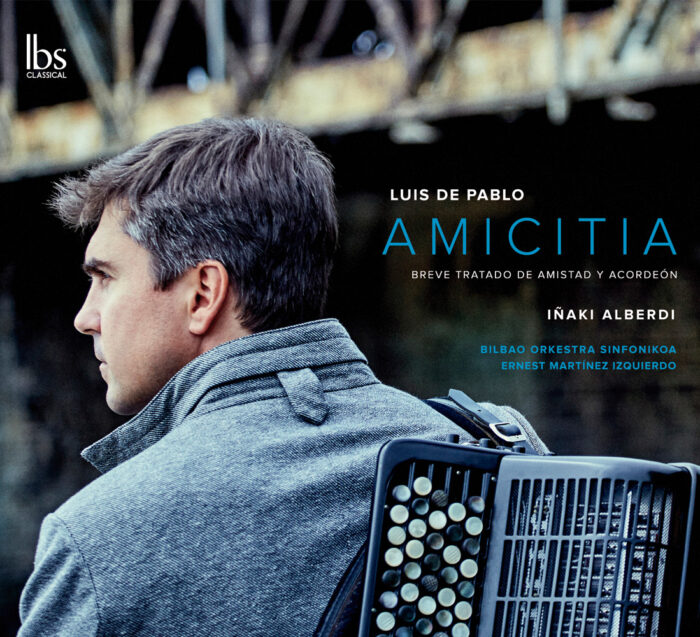 Amicitia 14,95€
 -
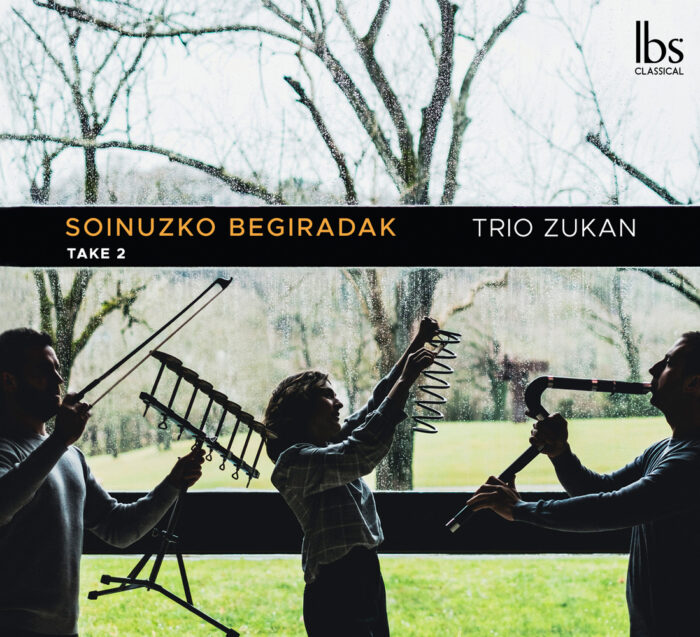 Soinuzko Begidarak T2 14,95€
 -

-
 Gabriel Erkoreka: Ametsak 14,95€
 -
-
 Hyperklavier 14,95€
Productos relacionados
-
 Con silencio vibrante 14,95€
 -

-
 Kammersymphonie 14,95€
 -
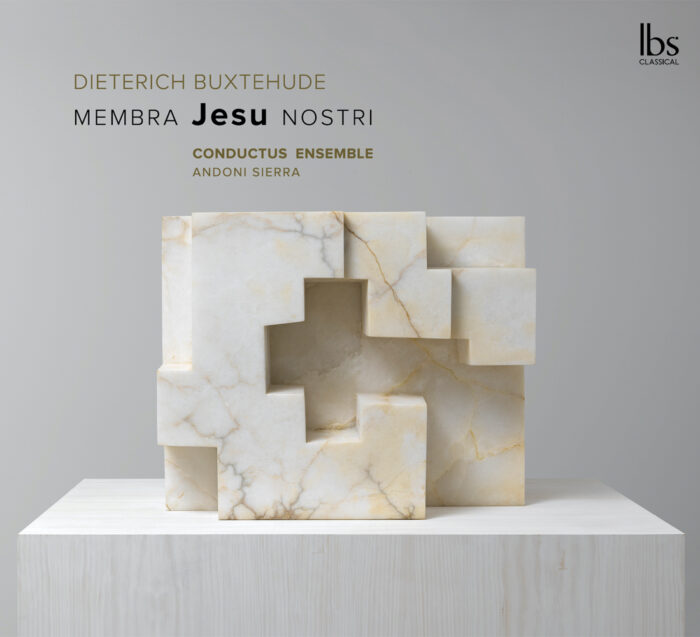 Membra Jesu Nostri 14,95€
 -
 Jazz Impact 14,95€
 -
 Le jour de l'an 14,95€