

Mozart Horn Concertos
Concerto in E-flat Major, K495 III. Rondo
18,00€
Probably the most perfect version ever recorded of Mozart’s concertos with the incredibly difficult Natural Horn. The use of period instruments, a movement which began in the middle of the past century, is no longer a passing fad or something novel. Rather, it represents a fundamental part of our musical culture whose importance goes far beyond the simple nostalgic or poetic recreation of a score. The “archaic” technical characteristics of period instruments often force performers to seek solutions that, while resulting in a sound closer to historical reality, often surprise the listener. Technical constraints are even more evident in wind instruments, given that the significant evolution in their construction has accentuated the differences that emerged over the course of their development.
BOOKLET
18,00€
Mozart’s Horn Concertos
The survival of Mozart’s horn concertos after his death is the result of a partnership, supposedly encouraged by Haydn, between Mozart’s wife Constanze and the young composer-publisher, Johann André of Offenbach am Main. André had a genuine interest in Mozart’s music and was also eager to ensure the success of the publishing business which he had recently inherited from his father so the opportunity, in 1799, to buy all the manuscripts which Constanze had been left by the composer must have seemed too good to miss. As a result, on 8 November he and Constanze signed a contract under which André paid 2550 Florins for her collection of Mozart’s manuscripts and, in addition, undertook to give Constanze four free copies of each work as it was published.
Among these were the manuscripts, not all of them complete, of Mozart’s horn concertos. None of these had been published during the composer’s lifetime, and in 1800 André wrote again to Constanze because he anticipated producing a complete edition Mozart’s music and was concerned about missing portions of the manuscripts of the horn concertos K417 and K495. Constanze’s reply, dated 31 May, included a list of some fragments of horn concertos which she still had for sale and while André was only really interested in publishing complete works, he agreed to buy them as his interest in Mozart’s music went well beyond financial considerations.
The earliest of the works for horn in Constanze’s collection comprised some pages from a concerto in E flat which Mozart had written around March 1781 at about the time when he moved to Vienna. The score was incomplete: there was no slow movement, and the orchestration was unfinished, and as such, it was of little use to André. In 1856, on the centenary of his father’s birth, Carl Thomas Mozart compromised the music’s survival further by cutting up the pages of the first movement (a sketch known to Mozart scholars as “K370b”) and giving them away as souvenirs. During the twentieth century, musicologists gathered up the surviving fragments, and while a few bars are still missing, and Mozart only ever wrote what appears to be a sketch linking the end of the movement’s exposition to its recapitulation, enough survives to allow a convincing reconstruction to be made. As the Rondo appeared just to lack some of its orchestration, Breitkopf and Härtel published its sketches as K371 in their collected edition of Mozart’s works, and the first of many subsequent completions of the score was made around 1909 by the horn player and composer Henri Kling. The discovery of a further 60 bars in 1991, which are demonstrably a part of the same movement, revealed a piece that is more spacious and elegant than was previously thought and these are included in the performance on this recording. This two-movement concerto is performed here in a version by musicologist and pianist Robert Levin as K370b + 371.
Many of Mozart’s works for the horn were written to be played by his close friend, Joseph Leutgeb, who was said by the Mercure de France in 1770 to be so skilled at playing the instrument that he could “sing an adagio as perfectly as the most mellow, interesting and accurate voice.” However, Leutgeb denied all knowledge of this concerto when Constanze showed it to him, so it is possible that Mozart intended it to be played by the Munich horn player Franz Lang – Mozart had been in Munich immediately before he moved to Vienna – or by Jacob Eisen, the second (lower) horn player at the National Theatre in Vienna. The solo part of the concerto certainly seems to have been written for someone who specialised in the instrument’s lower register, and Constanze told André that Eisen’s widow had some horn music which Mozart had given to the player. However, in the same letter Constanze suggested that she herself had the manuscript of the Rondo, leaving the possibility that it was written for someone else and that Eisen’s widow had a different work in her possession.
Joseph Leutgeb had been a family friend of the Mozarts since 1763 when he moved to Salzburg after a failed attempt to follow Haydn into employment with the wealthy Esterhazy family. In 1777 he returned to Vienna, the city of his birth, and Mozart’s father wrote to Wolfgang to say that Leutgeb had bought a cheese business “the size of a snail’s shell” in the suburbs. It seems, however, that Leopold was being unwittingly involved in a ruse by Leutgeb both to borrow some money and to persuade Mozart to write a concerto for him: recent research has shown that, while Leutgeb’s first wife’s family had once owned a cheese shop, it had closed long before the horn player’s return to the city. Leutgeb’s attempt to persuade Wolfgang to write a horn concerto for him does not seem to have succeeded until he wrote the E flat concerto K417 in a manuscript teasingly headed, “Wolfgang Amadè Mozart takes pity on Leutgeb, ass, ox and fool, at Vienna 27 May 1783”. While Constanze’s conversations with André suggest that there had been some doubt over whether she could provide him with a complete score of the concerto, and that even though parts of the autograph manuscript are still missing today, he must have received sufficient of it to enable him to publish it in 1802.
The manuscripts which Constanze sold to André included another horn concerto fragment in E major (K494a, Anh.98a) on paper which suggests that it dates from 1785 or early 1786. It appears from the fully scored orchestral exposition that Mozart intended it to be the most ambitious of his horn concertos, but the orchestration fizzles out a few bars after the soloist comes in, and a few bars later the solo part stops in the middle of a phrase. It is possible that Mozart continued the solo line on another sheet of paper which is now lost, but André had no use for so incomplete a work, and he did not publish it. It was also unfamiliar to Leutgeb when Constanze showed it to him.
Mozart’s next completed horn concerto was the most celebrated of them all, K495 in E flat. We know from the composer’s catalogue of works that he finished composing it on 26 June 1786, but many pages from the manuscript were missing even when André was preparing his edition. It is thought that, by 1786, and with his playing career coming to an end, Leutgeb was losing his high register, and André’s edition looks as though it may have been made from a score which the player had edited to avoid some of the higher notes. Certainly, a more convincing – and seemingly uncut version – of the concerto emerged shortly afterwards from a rival publishing house, Contore delle Arte, and it is this which is normally used in performance today and which is recorded here.
It is very likely that the Concerto in E flat, K447, was written for Leutgeb to play as Mozart wrote his name twice above pauses in the score of the finale. The autograph score reached André among the manuscripts which he bought from Constanze, and remains complete today, but the date of its composition is unclear. It was always assumed that, as it does not appear in the catalogue which Mozart valued greatly and used to detail each new work as it was composed, it must have been written before he started the catalogue in 1784. However, as the manuscript is written on paper which he only used elsewhere when he was writing Don Giovanni in 1787, most modern commentators agree that it was composed in the same year or perhaps early in 1788.
Mozart’s only remaining horn concerto is the enigmatic two-movement K412/386b in D major. André, whose deep interest in Mozart’s music resulted in him being described during the twentieth century as “the father of Mozart research”, thought that the first movement and a draft of the rondo were composed in 1782. By the end of the 19th Century, scholars had decided that, while André was right about the first movement, the Rondo dated from Good Friday, 6 April 1787. It was only when Mozart’s autograph manuscript reappeared in 1977 after being lost for over thirty years, that it was possible for the British musicologist, Alan Tyson, to study the paper which Mozart used in the manuscript, and to reveal that the first movement was finished in 1791. He was also able to show that the second movement was drafted in the same year but was incomplete when Mozart died, and that the version of the finale traditionally performed (K514) was a completion by Mozart’s pupil, Franz Süssmayr. Its first movement is tiny and is less than half the length of the opening movements of the contemporaneous clarinet concerto, K622, and the B flat piano concerto, K595, and Mozart’s autograph score is notable for the number of occasions on which he crosses out his ideas. Robert Levin has suggested that both its brevity and the deletions may have been to accommodate Leutgeb’s failing powers – he would retire completely from horn playing in 1792 – so in his reconstruction recorded here, he has not only completed the orchestration of the finale but has restored several of Mozart’s deletions to attempt to recreate a version as close as possible to the composer’s original intentions.
As Mozart’s manuscript score of the Rondo also includes a running commentary on the music, often at Leutgeb’s expense, Javier Bonet has included a bonus track in which he performs the same music, with actor Carlo Gianneschi reciting Mozart’s remarks. He also interpolates a cadenza in which he introduces one by one the themes from all of Mozart’s other horn concertos. He says this is his own joke against Mozart on behalf of all horn players!
John Humphries
The Natural Horn
The Natural Horn: Thoughts on Technique and Performance
The use of period instruments, a movement which began in the middle of the past century, is no longer a passing fad or something novel. Rather, it represents a fundamental part of our musical culture whose importance goes far beyond the simple nostalgic or poetic recreation of a score.
The “archaic” technical characteristics of period instruments often force performers to seek solutions that, while resulting in a sound closer to historical reality, often surprise the listener. Technical constraints are even more evident in wind instruments, given that the significant evolution in their construction has accentuated the differences that emerged over the course of their development.
In brass instruments, the absence of valves or pistons is the main and most obvious characteristic. Any resonant tube, any instrument without valves or pistons, and in particular the natural horn, can produce what we know as the “harmonic series,” which is simply a kind of scale, or rather an arpeggio, in which many intermediate notes do not exist. These must be obtained by the performer using “artificial” procedures, the most common of which is the greater or lesser insertion of the right hand into the bell. With this technique, pitch can be changed from a semitone to three-quarters of a tone, with the unfortunate consequence that this also changes the quality of the sound, making it more brassy.
It is here where a performer with a great commitment to musicality, so as to be faithful to the message being conveyed, must try to minimize these differences using other, sophisticated technical resources more in line with vocal technique. The unusual timbral qualities, then, should be exploited as an effect only when appropriate to the musical idea conveyed by a particular phrase.
Using the colours of the “stopped sounds” with care and musical intelligence, in a continuous search for a singing quality, for beauty in the musical phrase and for homogeneity of sound, is precisely what my teacher Hermann Baumann transmitted to me. Let us not forget that he was the first to record this music with Nikolaus Harnoncourt and his Concentus Musicus Wien in 1974. This manner of playing the natural horn is one of the defining characteristics of a conception of the instrument which stands in sharp contrast to that which prioritises intonation over musical discourse.
As J. Humphries mentions in his notes on this very work, the comments of the time were very clear on the matter. The “Mercure de France” stated in 1770 regarding J. Leutgeb (to whom the music is dedicated) that “he sings the adagios as perfectly as the smoothest, most interesting and most precise voice would.» The same specialised press of Paris commented some years later, referring to L. F. Dauprat, professor at the city’s Conservatoire Supérieur: “He plays the natural horn magically; when he plays there are no differences between the open and stopped sounds.”
I have also analysed in depth each of the manuscript scores – or what remains of them – and the details in the scores, as well as those that did not need to be written down because they formed part of a common language, something which was normal in pieces featuring the horn as a solo instrument. Like all pieces by the genius of Salzburg, this music is beautiful and unique, but at the same time, it is born of circumstances, out of commitments or as payment for personal favours, composed without the pretensions of other more important scores.
With all this in mind, and with the invaluable help of Emilio Moreno and his enormous historical and stylistic knowledge, I have also approached this performance from the perspective of string players, who, together with singers, are the true heirs of authenticity in historically informed performance. In doing so, many details have been taken into consideration, such as articulations, types of attack (bow strokes), ways of sustaining or not sustaining sounds, and many other ideas previously overlooked in natural horn performances, in a historically informed version based on a thorough knowledge of the sources, texts and theoretical writings of the original performers involved. Finally, approaching the concertos as if they were yet unpublished, we have opened ourselves to new ideas that have brought freshness to music that has been performed a thousand times over.
Whether we have achieved something historic – or at least interesting – is not for me to say, but rather for you, the ultimate recipient of this project, to decide.
Javier Bonet Manrique
Javier Bonet
Javier Bonet, began his studies in Spain under the tutelage of his father and Miguel Rodrigo in Valencia. Continuing his studies he accomplished his faculties at Folkwang Music Academy in Essen, Germany, with Hermann Baumann. He also took part in masterclasses of Daniel Bourgue, Philip Farkas, Vicente Zarzo and Ab Koster. Bonet is a tireless researcher in the field of horn composition and a world-wide sought-after soloist and chamber musician. As a player of the natural horn he enjoys an internationally acknowledged reputation as an interpreter on historical instruments, which are likewise the domain of the ensemble Corniloquio, founded by Bonet himself. He has released numerous recordings of the natural horn on CD , as e.g. four CDs together with ARSIS. Two with the pianist Miriam Gómez-Morán (Tableau Musical and sonatas for horn and piano) and two CDs together with Corniloquio, one of which dedicated to L. Dauprat and the other to J. F. Gallay. In the genre of the French horn his productions with ARSIS have turned out to be outstanding, among which the recordings of Great Romantic Horn Concertos, Romances pour le cor. And for the label VERSO “Naturaleza Humana”, concerto for French horn and orchestra, by the composer Juanjo Colomer. Bonet’s most celebrated recording on video and CD, also for the label ARSIS contain a version of Mozart’s horn concertos played by the Munich Radio Symphony Orchestra conducted by Hermann Baumann. The latest recording, by the title of Just For Fun with Miriam Gómez-Móran at the piano as well, released in 2016 for the new label EXAUDIO contains his own transcriptions of some popular music for piano, violin, cello or human voice. This commendable collection of romantic and virtuoso pieces for horn and piano includes titles like ‘The Bumle Bee’, ‘Monti’s Czardas’, ’The Pink Panther’, ‘The Swan’ and arrangements of pieces by Sarasate, Tchaikovsky, Chopin, Ravel and Debussy, just to name the most significant ones. Bonet has not only given the first performance of brand-new works by some contemporary composers, but he also excels in the field of chamber music. Furthermore, he is best-known as an experienced instructor on the sector of musical pedagogy. As a horn soloist he has performed with the majority of the famous Spanish orchestras as well as with other orchestras in several European countries and in Taiwan, China, Venezuela, Argentina, Japan and the U.S.A. Highlight his last tour with Miriam Gómez-Morán at the piano, touring the US with a final recital at Carnegie Hall in New York. Bonet has gained great acclaim for the performance of the world premiere of concertos for horn and orchestra by E. Cosma, J. Colomer, M. Constant and for the Spanish first performance of the Ligeti “Hamburgisches” Horn Concert. Only lately the concerto Ab Origine by Salvador Brotons with Bonet and the Orquesta Nacional de España enjoyed its most remarkable world premiere. As a horn teacher Bonet offers regular courses in Spain and at several foreign conservatories in Lisbon, Porto, Paris, Budapest, Berlin, Bloomington, Seoul, Mexico City, Caracas, Peking or Tokyo. As a professor of horn he worked with the Conservatorio Superior de Salamanca and at present holds a chair as a professor of natural horn and French horn at ESMUC in Barcelona. – Being a prize-winner himself in various international competitions he is now active in the jury of the most reputed competitions as they take place in Porcia, Geneva or with the German Radio Corporation ARD in Munich. Javier Bonet has been a steady member of the Orquesta Nacional de España since 1987.
LA REAL CÁMARA
La Real Cámara fue fundada en 1992 por Emilio Moreno con el objetivo prioritario de difundir el importante patrimonio musical hispano de los siglos XVII, XVIII y XIX y cuenta entre sus componentes, variable en función a los diferentes repertorios abordados, con un importante grupo de músicos nacionales y extranjeros, todos ellos reconocidos individualmente por su prestigio internacional y su gran experiencia en la práctica histórica. La Real Cámara ha actuado en salas de concierto, festivales y temporadas de España, gran parte de Europa, América del Norte, Centroamérica y Japón, incluyendo en prácticamente casi todos sus programas música inédita patrimonial española, a la vez que ha grabado una importante discografía en Glossa jalonada de premios y distinciones (“Premio Internazionale Antonio Vivaldi” en Italia, el “Prix Cecilia” en Bélgica, el “Premio Festclásica” en España o diversos “Diapasons d’Or” en Francia), discografía consagrada íntegramente a la música española con especial hincapié en la figura de Boccherini. El último y reciente trabajo discográfico de La Real Cámara está dedicado a la opera prima del jesuita sevillano Francisco José de Castro, el “Corelli Español”, sus Trattenimenti Armonici da Camera de 1695, una selección de los cuales se presenta en este concierto. Junto con Emilio Moreno, violinista y violista, director, pedagogo (profesor en la ESMUC, Barcelona), investigador, concertino de diferentes orquestas barrocas europeas y Viola Principal y fundador de la Orquesta del Siglo XVIII de Ámsterdam, colaboran figuras tan destacadas como el violinista Enrico Gatti, eminente pedagogo (La Haya, Bolonia), solista considerado el mayor especialista en la música instrumental italiana barroca y fundador del Ensemble Aurora, la violonchelista Mercedes Ruiz, colaboradora de los mejores instrumentistas, cantantes y grupos nacionales e internacionales y con una larga carrera como solista y pedagoga, y los hermanos Aarón y Pablo Zapico, representantes de la nueva generación de músicos españoles con una ya importante trayectoria como solistas, directores, colaboradores de otros solistas y grupos, y fundadores de Forma Antiqva, uno de los grupos españoles junto a La Real Cámara con más proyección internacional en la actualidad.
También te recomendamos…
-
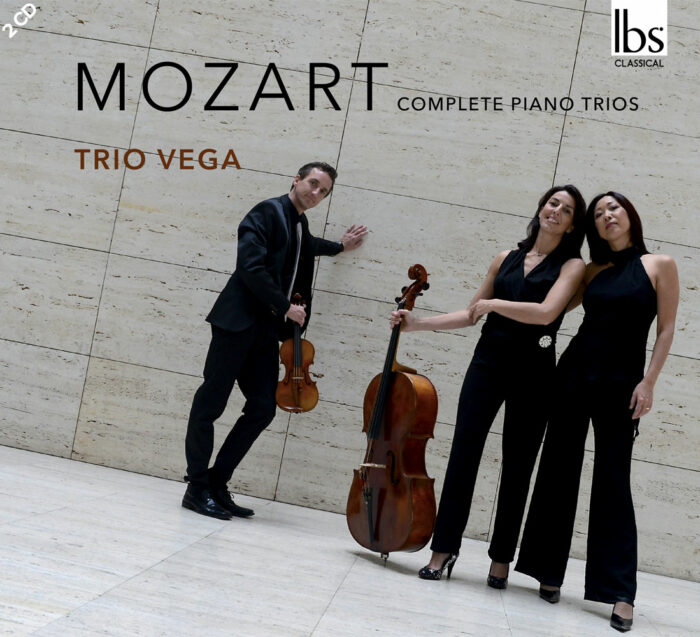 Mozart Piano Trios 17,95€
 -
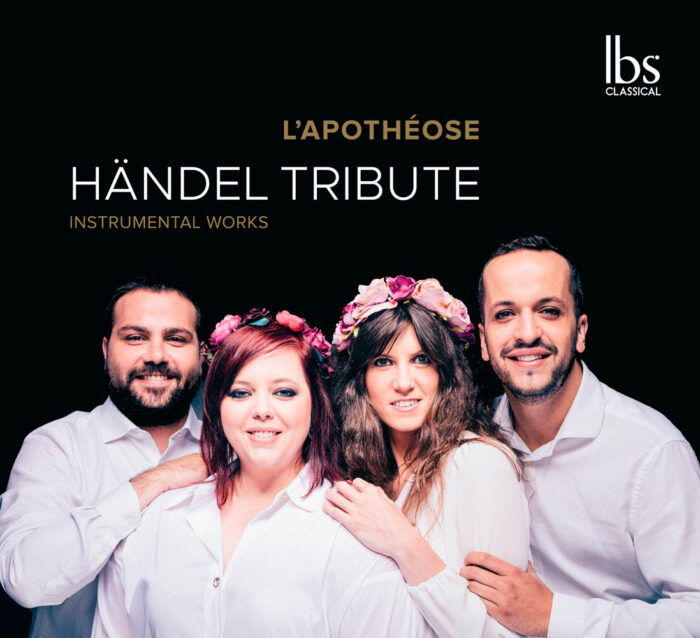 Handel Tribute 14,95€
 -
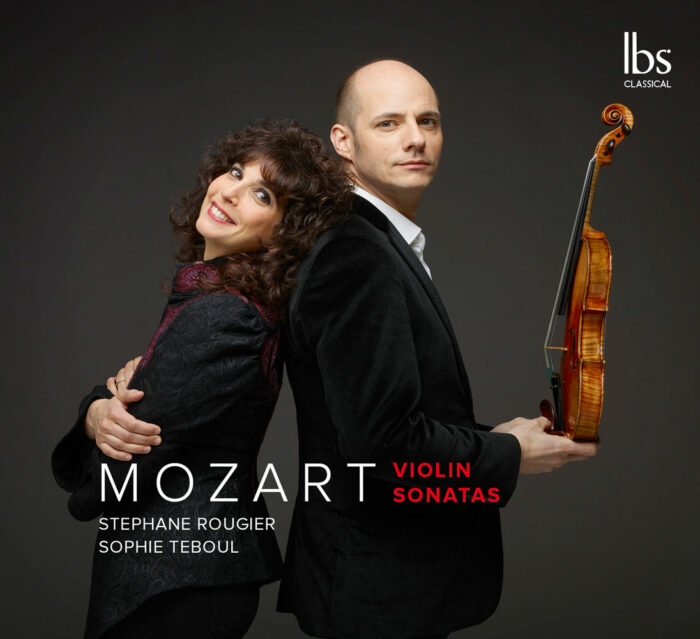 Mozart Sonatas 14,95€
 -
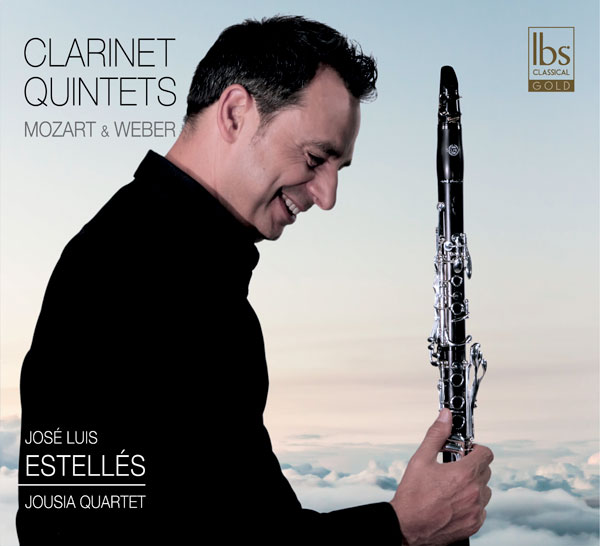 Clarinet Quintets 13,95€
 -
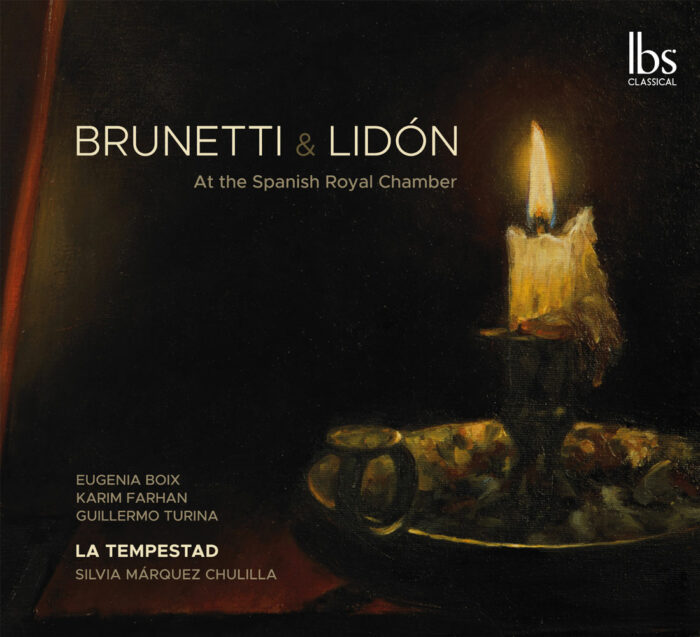 Brunetti & Lidón 14,95€
 -
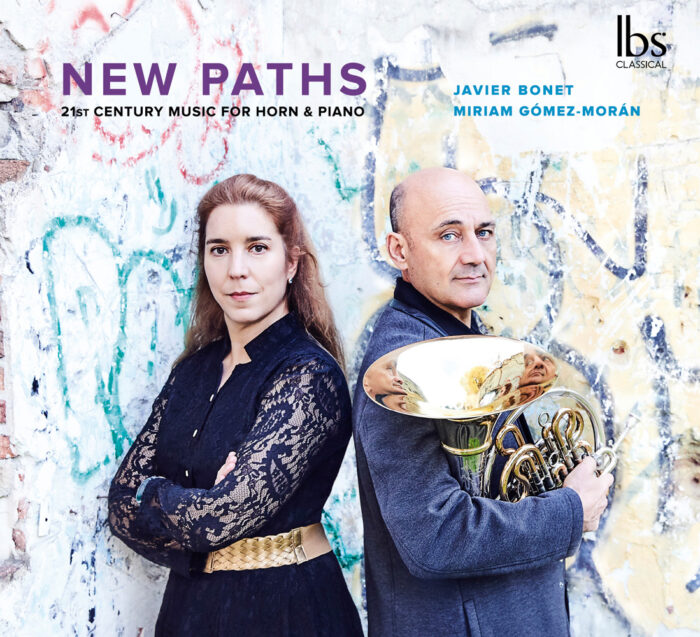 New Paths 14,95€
Productos relacionados
-
 America 14,95€
 -
 Solitaire 18,00€
 -
 Azumi Nishizawa 14,95€
 -
 Metaludios I 13,95€
 -
 Deep Light 14,95€
 -
 Debussy Preludes 18,00€