About...
SOUNDS OF A BROKEN TIME
Chamber Music by Schoenberg, Eisler, and Hindemith
In May 1906, Arnold Schoenberg (Vienna, 1874 – Los Angeles, 1951) traveled to the city of Graz to attend one of the few performances then permitted of Richard Strauss’s opera Salome, likely the first major musical scandal of the 20th century. He arrived having thoroughly studied the vocal part, thanks to scores provided by Gustav Mahler, an enthusiastic admirer of the work. Indeed, Mahler himself had been pressuring Austrian censors to allow a performance in Vienna—something that would not occur until more than a decade later. After the performance in Graz, Schoenberg told his students, “The first vocal progressions might be theoretically explainable in twenty years.” That summer of 1906, he composed his Chamber Symphony No. 1 in E major. Although some tonal aspects of Salome can be detected, this new work ultimately breaks away from it completely.
This composition stands in contrast to the monumentality of the late 19th century, epitomized by Mahler’s symphonies, Schoenberg’s own Gurre-Lieder, or Debussy’s Pelléas et Mélisande. The Chamber Symphony, with just fifteen instruments, embodies a kind of compression—a reaction against the symphonic and operatic gigantism fashionable at the time. Schoenberg further condensed the traditional multi-movement symphony into a single movement, subdivided into distinct themes and sections. He also explored the technique of Klangfarbenmelodie (tone-color melody), using instrumental timbres and textures to create melodic lines.
The work premiered on February 8, 1907, in Vienna—just three days after the scandalous debut of his First String Quartet. According to Egon Wellesz, one of his students, the premiere of the Symphony sparked “seat rattling, whistling, and ostentatious exits from the hall…” But perhaps the most infamous reaction came on March 31, 1913, at the historic Musikverein in Vienna. At a concert that also featured works by his teacher Zemlinsky and his pupils Berg and Webern (who created the present 1923 quintet arrangement), the audience was so bewildered by these unfamiliar sounds that a brawl broke out, requiring police intervention. Years later, Schoenberg would write in his Harmonielehre: “When composing, I decide only with feeling—the feeling of form. Everything else is excluded. The artist’s creation is instinctive; the conscious mind has little influence.” Over time, the piece came to be recognized as an icon of the 20th-century avant-garde, foreshadowing what was to come both for Schoenberg himself and for the history of music yet to be written.
Not far off in time, during World War I, military bands were organized to play marches and dances for soldiers recovering near the front before returning to combat. One notable participant in these bands, according to biographers, was Paul Hindemith (Hanau, 1895 – Frankfurt am Main, 1963), who even formed a string quartet composed entirely of soldiers—at the request of an officer who loved Debussy’s music. In the postwar years, beginning in the 1920s, Hindemith began composing in a fully avant-garde and radical style. His artistic evolution was shaped by practicality, efficiency, and realism. From this perspective, the concept of Gebrauchsmusik (“utility music”), which was gaining traction in Weimar-era Germany, became closely associated with him.
Though the term was not new—in fact, before Beethoven, virtually all music was Gebrauchsmusik —Hindemith understood or revived the need to make music more functional, turning it into something beyond the concert hall. His desire to connect music with the community defined much of his output, including educational compositions known as Lehrstücke (didactic pieces) and Spielmusiken (music for play). This context explains the genesis of the Quartet for Clarinet, Violin, Cello, and Piano in F major. In the field of chamber music, aside from Reger, Milhaud, and Martinů, few composers were as prolific as Hindemith. This quartet, composed in 1938—one year after his exile from Nazi Germany to Switzerland—is the only work beyond duet form composed between his String Trio No. 2 (1933) and String Quartet No. 5 (1945).
Structured in three movements, the piece reflects a contrapuntal Baroque aesthetic and aligns with the neoclassical path previously taken by Stravinsky. In contrast to Schoenberg, Hindemith by this point had become a defender of tonality, and a proponent of an “expanded tonality” that, while avoiding the major/minor dichotomy, still relied on a hierarchical order of intervals. In sum, Hindemith transformed from one of the boldest, most radical avant-gardists of his youth into a revered “classic” for an entire generation. As French composer Emmanuel Loubet once remarked, it would be fair to consider “this heir to the great tradition—from Bach to Brahms—as a revolutionary of the 20th-century musical world.”
Around the same period, circa 1933, Hanns Eisler (Leipzig, 1898 – Berlin, 1962) was struggling to maintain his musical career under Nazi rule. Deeply committed to Marxist ideals, his political engagement—especially through setting texts by Bertolt Brecht to music—led to his exile. Not even an intervention by Wilhelm Furtwängler could prevent his departure. Eisler distrusted and rejected Hindemith’s Gebrauchsmusik, arguing that what Germany needed was “music that spoke deeper truths about human society, that revealed people, their daily lives…”
His disillusionment and growing inability to reconcile his political beliefs with modernist complexity were evident in a letter to his teacher Schoenberg: “Modern music bores me. I’m uninterested in much of it—even hate and despise it.” In this context, and already in exile, he found in theater and cinema an ideal medium for his considerable talents. Around 1940, while living in New York, Eisler received a Rockefeller Foundation grant to explore using avant-garde musical language in film, free from Hollywood stereotypes.
Shortly thereafter, in 1941, he was commissioned to score the experimental silent film Rain (1929) by Dutch filmmaker Joris Ivens. From this commission emerged his quintet Vierzehn Arten den Regen zu beschreiben (Fourteen Ways of Describing Rain), which Eisler always considered his best work. The fourteen pieces range, in his words, “from the simplest naturalism of a detailed, synchronized painting to extreme contrasts where music reflects beyond the image.”Though conceived for cinema, he also intended it as a tribute to Schoenberg on his 70th birthday. Hence the numerous nods to his teacher: the use of the same instrumentation as Pierrot Lunaire, the symbolic opus number 70 (Eisler had long abandoned opus numbering), and the arrangement of bars in the seventh variation—66 bars grouped as three sets of 13+9—a reference to September 13, Schoenberg’s birthday.
Eisler also called it “fourteen ways to be sad with dignity,” perhaps overwhelmed by the destruction and Nazi barbarity that was ravaging his homeland.
Juan Luis Gallego
Fin du Temps
FIN DU TEMPS
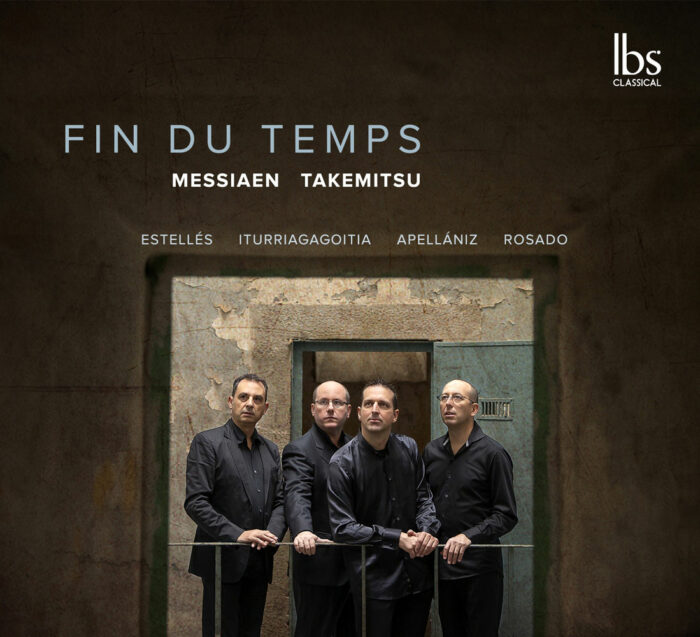
Fin du Temps is a project that embraces the modern concept of a soloist ensemble, bringing together performers with distinguished careers both as soloists and in the realm of chamber music. Its members first joined forces in September 2017 to perform one of the most iconic works of the 20th century: Quatuor pour la fin du Temps by Olivier Messiaen. The performance took place in the majestic León Cathedral and left a profound impact on both the audience and the musicians themselves. That concert marked the beginning of a shared project that has continued to grow ever since. This initial experience was not just a musical exercise, but an artistic revelation: the emotional intensity, symbolism, and spiritual complexity of Messiaen’s work found a sincere and deep connection in these performers.
The first tangible result of this collaboration was the recording of the aforementioned Messiaen quartet, accompanied by Quatrain by Toru Takemitsu, another work that shares a mystical sensitivity and refined timbral language. Released by the IBS Classical label under the title Fin du Temps, the recording was enthusiastically received by critics, quickly establishing the ensemble as a benchmark formation. The album earned prestigious awards such as the Melómano de Oro(Melómano Magazine), the “Exceptional” distinction from Scherzo magazine (where it was selected among the best recordings of the year), five Diapason awards from the French magazine Diapason, five stars from Classica France, and the title of “Recording of the Month” from the British publication MusicWeb International. The latter praised the album as a definitive, benchmark interpretation, capable of capturing the spiritual essence and textural richness of both Messiaen and Takemitsu.
The success of this initial work strengthened the musicians’ commitment to continue exploring demanding repertoires and presenting compelling programs. Shortly thereafter, the group expanded with the addition of flutist Clara Andrada, an internationally renowned performer who had already collaborated with several members in other chamber projects. Her arrival opened up new possibilities for the group’s repertoire, enabling the ensemble to approach works for this archetypal formation with enhanced timbral richness and greater interpretive flexibility.
Fin du Temps has undertaken new recordings, reaffirming its dedication to the avant-garde of the 20th century and key works of the modern chamber repertoire. Among these projects is the current program, which seeks thematic coherence around a time of turmoil on all levels — the first half of the 20th century — through performances of KammersymphonieOp. 9 by Arnold Schoenberg, in the chamber version by Anton Webern; Vierzehn Arten den Regen zu beschreiben by Hanns Eisler, a collection of miniatures inspired by the poetry of Bertolt Brecht; and the Quartet for clarinet, violin, cello, and piano by Paul Hindemith.
In addition to its recording work, Fin du Temps has developed a vigorous concert activity, participating in festivals and concert series of national and international significance. However, the group is not limited to traditional performance formats and enthusiastically explores interdisciplinary and collaborative formats. One of its most significant milestones has been its participation in On Air, a show created alongside soprano Laia Falcón and music presenter Martín Llade. This project, presented at the prestigious Ciclo de Grandes Autores e Intérpretes de la Música at the Autonomous University of Madrid and held at the National Auditorium of Music, combined music, storytelling, and theatrical elements. The success of this production not only confirmed the ensemble’s versatility but also its ability to connect with diverse audiences, opening new paths for artistic communication.
The artistic core of the ensemble consists of five highly accomplished musicians whose individual careers contribute a wealth of experiences and perspectives that are reflected in the depth and quality of their collective work.
Clara Andrada (flute)
Regarded as one of the most international and versatile flutists of her generation, Clara Andrada has held the position of principal flute of the Frankfurt Radio Symphony Orchestra since 2005 and the Chamber Orchestra of Europe since 2011. Her solo and chamber music career has led her to collaborate with some of the world’s most prestigious orchestras, including the Berlin Philharmonic, London Symphony Orchestra, London Philharmonic Orchestra, NDR Elbphilharmonie Orchester, Swedish Radio Symphony Orchestra, Rotterdam Philharmonic, and Orquesta de Cadaqués. As a chamber musician, she has shared the stage with artists such as Sir András Schiff, Janine Jansen, Martin Fröst, and Emmanuel Pahud, bringing to each collaboration a blend of technical virtuosity, timbral refinement, and musical sensitivity. Her presence in Fin du Temps brings not only a new tonal color but also extensive experience in contemporary repertoire and an insatiable artistic curiosity.
José Luis Estellés (clarinet)
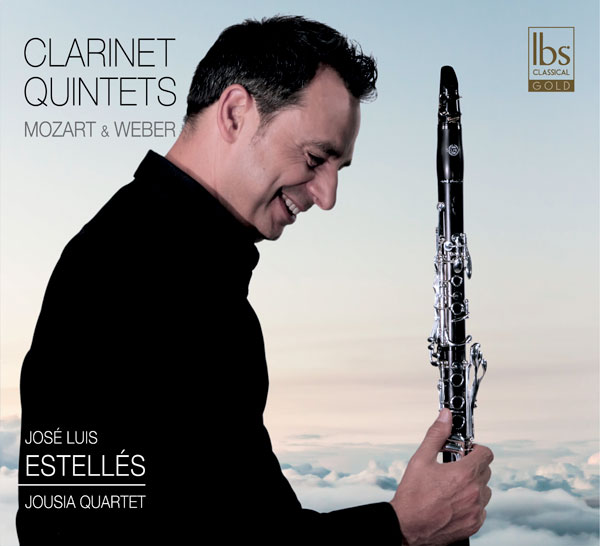
A renowned clarinetist and orchestral conductor, José Luis Estellés has built a vibrant international career characterized by his passion for chamber music and his expressive communication on stage. He has performed recitals and concerts throughout Europe, the Americas, and Asia, collaborating with top ensembles and soloists, and has appeared as a soloist with more than twenty orchestras. As a conductor, he has worked with symphonic, operatic, and contemporary repertoires in Spain, Belgium, France, the UK, Bulgaria, Mexico, and Germany. Critics have unanimously praised his artistry; the newspaper ABC described “his sound, technical ease, sense of tempo, and melodic interpretation” as “pure genius.” In academia, Estellés is the clarinet Professor at the Centro Superior de Música del País Vasco (Musikene) and the Wind chamber music Professor at the Hochschule für Musik und Tanz in Cologne, two leading institutions in the training of Europe’s emerging performers.
Aitzol Iturriagagoitia (violin)
Winner of international competitions such as the Henryk Wieniawski in Lublin and the one organized by the European Broadcasting Union, Aitzol Iturriagagoitia has been a soloist with orchestras including the Dominican Republic National Symphony, Vogtland Philharmonie, Mittelsächsische Philharmonie, the Basque Youth Orchestra, the Bilbao Symphony Orchestra, and the Basque National Orchestra. He has worked under conductors such as Yehudi Menuhin and Lorin Maazel and has collaborated with internationally renowned musicians like Christian Zacharias, Gidon Kremer, Heinz Holliger, and Asier Polo. For years, he was also the first violin of the Arriaga Quartet. His interpretive approach combines deep technical rigor with sincere expressiveness, and his commitment to chamber music is reflected in his constant involvement in collaborative projects. After teaching at the Musikhochschule in Leipzig, he currently holds the violin Professor chair at Musikene, where he shares his expertise with a successful class of new generations of violinists.
David Apellániz (cello)
Described by Scherzo magazine as a musician whose “lyricism and sonic flexibility are his signature,” David Apellániz is one of the most compelling cellists on the current scene. He has performed at iconic venues such as the Salzburg Festival, Berlin Konzerthaus, A Tempo Festival in Caracas, the National Auditorium of Madrid, Teatro de la Maestranza in Seville, Palau de la Música Catalana, Granada International Festival, Palacio de Festivales de Santander, and the San Sebastián Musical Fortnight. His open and versatile approach has allowed him to excel in both classical and contemporary repertoire, frequently participating in premieres and new music projects. His warm tone and musical responsiveness make him a key pillar of the ensemble. He currently serves as a violoncello Professor at the Conservatorio Superior de Murcia.
Alberto Rosado (piano)
Born in Salamanca in 1970, Alberto Rosado represents a generation of performers deeply committed to both tradition and innovation. Trained in an environment of excellence, he has worked with some of the most significant composers of the 20th and 21st centuries, including Helmut Lachenmann, Cristóbal Halffter, Luis de Pablo, and Toshio Hosokawa. He has performed under great conductors such as Peter Eötvös, Susanna Mälkki, Josep Pons, Jonathan Nott, and Arturo Tamayo. Among his more than twenty released recordings stand out López López’s Piano Concerto with Kairos and Ligeti’s Concerto with Neos. His most recent recordings include José Manuel López López’s Trio II with members of the Arditti Quartet for Kairos, e-piano, Fin du Temps and all of Jesús Torres’ piano duets with IBS-Classical.. Since 1998, he has been a Professor at the Conservatorio Superior de Castilla y León, where he trains young pianists with a keen eye on the contemporary repertoire.
Fin du Temps has established itself as a space of artistic excellence and constant exploration. Its commitment to quality, innovation, and communication turns each of its projects into a unique experience, where music transcends sound to become emotion, reflection, and shared art.